

Tac Med Division — Schools, churches, businesses, families, and security personnel
Tac Med
Train. Prepare. Survive.
The gap between injury and survival is training.
“Rescue those being led away to death; hold back those staggering toward slaughter.” — Proverbs 24:11
When violence or catastrophic injury happens, professional help is coming. But you are already there.
ONE44 Tac Med combines civilian emergency medical principles with concepts derived from Tactical Combat Casualty Care (TCCC) to prepare ordinary people to function in extraordinary circumstances.
Recognize the threat. Preserve life. Control what you can. Get people to higher-level care. No hero mentality. No fear-based theatrics. Competence under pressure.
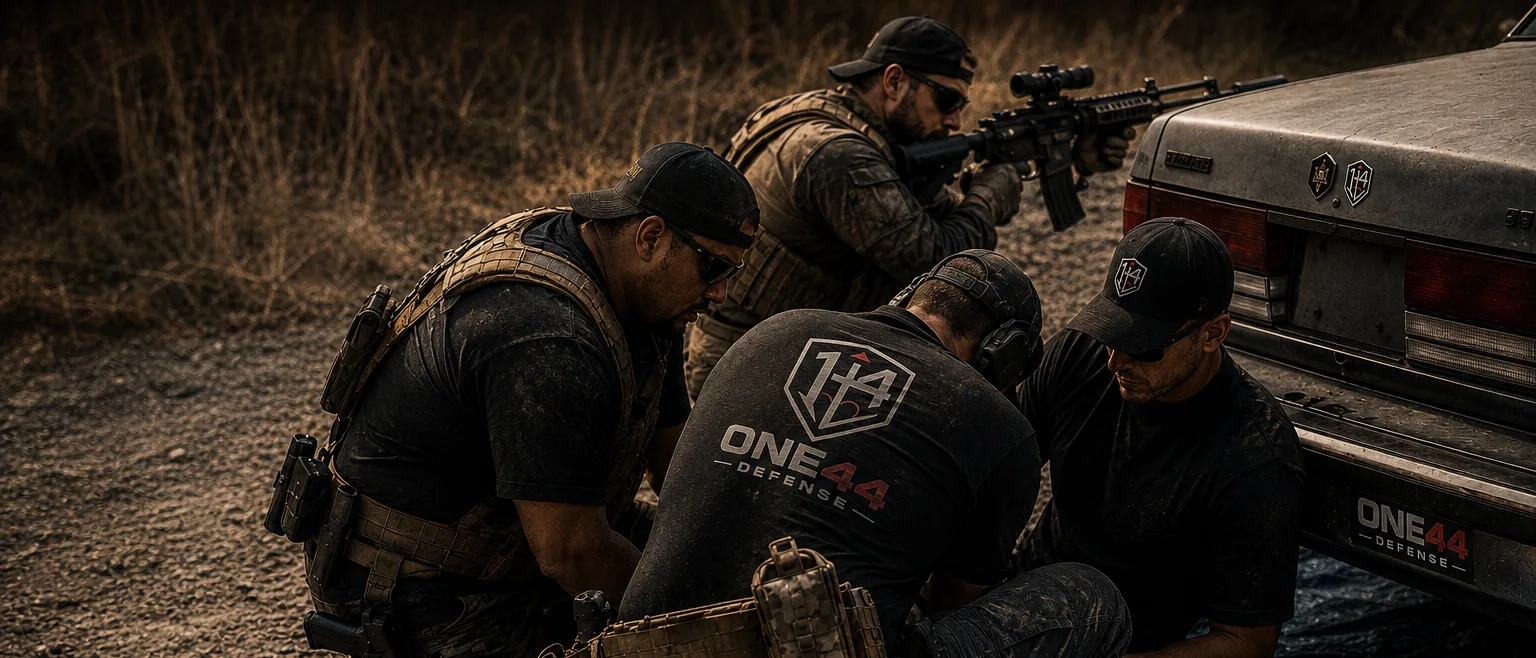
Active-threat preparedness
A restaurant. A church. A classroom. A workplace. An ordinary day can become a critical incident without warning — and a plan that has never been trained is not a capability.
We build practical response plans around your actual environment, for businesses, schools, churches, security teams and families. Everything we cover is listed below.
For schools — they were entrusted to you
Teachers are educators, not soldiers. We don't train them to become soldiers. We prepare them to recognize danger, protect life, communicate, move when appropriate, and give immediate lifesaving care within their training.
Because during a critical incident, the only adult standing between an injured child and death may be the teacher already in that room.
Parents should be able to trust that preparedness goes beyond a policy binder. Preparation is stewardship.
“Train up a child in the way he should go.” — Proverbs 22:6
For business owners — your people are your responsibility
You plan for fire, severe weather and emergency exits. Active-threat and traumatic-injury preparedness deserve the same professional consideration.
If violence happens, your people may have to act before police or EMS arrive. Do they know the plan? Where the medical equipment is? Can they recognize catastrophic bleeding — and use the equipment you've provided?
Owning trauma equipment is not the same as having a trauma capability. We help organizations close that gap.
Treat what kills first
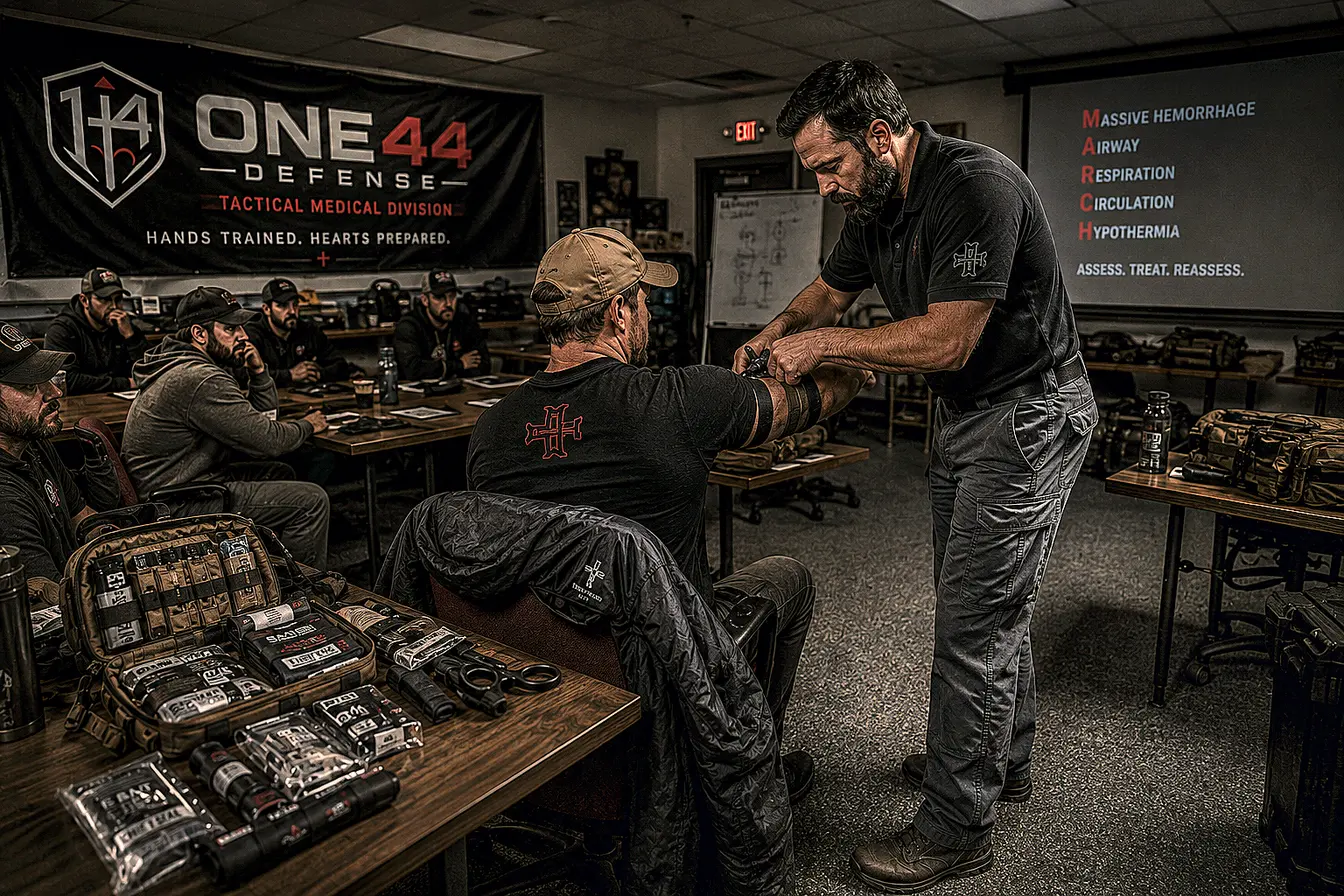
Rapid recognition and immediate response to preventable causes of traumatic death. Depending on the course and student level, instruction may include:
- M — Massive hemorrhage. Recognition and control of life-threatening bleeding.
- A — Airway. Recognition of airway compromise and appropriate response within the student's training.
- R — Respiration. Identification of serious breathing and chest-trauma concerns.
- C — Circulation. Recognition of shock and continued patient assessment.
- H — Hypothermia and head injury. Protecting trauma patients from environmental exposure and recognizing concerning neurological changes.
Training under pressure
Knowing a skill and performing it under stress are two different things.
Controlled, scenario-based training builds decision-making, communication, leadership, medical competence and stress management. Students learn to assess before acting, prioritize immediate threats, work within their capabilities, and communicate clearly when professional responders arrive.
We do not train panic. We do not manufacture fear. We build capability.
Preparedness is not fear. It is stewardship
Our faith does not call us to live afraid.
“For God gave us a spirit not of fear but of power and love and self-control.” — 2 Timothy 1:7
We can't control when violence, injury or disaster comes. We can control whether we've prepared to serve when it does — to step toward someone who needs help, stay disciplined when others are overwhelmed, and preserve life when seconds matter.
And when the moment comes, to be able to say: I am here. I am trained. I know what to do.
Faith over fear. Preparation with purpose. Service when it matters.